


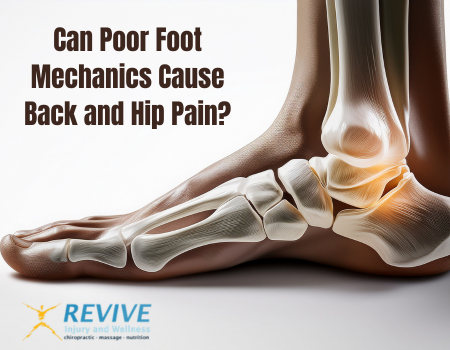
The connection between foot mechanics and back and hip pain is one of the most consistently overlooked relationships in musculoskeletal health. People experiencing lower back pain get their lower back examined. People with hip pain get their hip examined. The foot, which is the foundation that the entire kinetic chain is built on, and the first structure to contact the ground with every step, rarely gets considered until someone who understands the full chain looks at the whole picture rather than just the symptomatic area.
Poor foot mechanics don’t stay in the foot; they travel up.
How Foot Alignment Affects Everything Above It
The foot is designed to absorb impact and distribute force across a complex architecture of bones, joints, and soft tissue. When that architecture is functioning correctly, the force of each step gets absorbed and dissipated in a way that protects the structures above it. When it isn’t, the force gets passed upward in altered form, and the structures above the foot — the ankle, the knee, the hip, and the lumbar spine — absorb what the foot didn’t.
Overpronation is the most common foot mechanics problem and the one that creates the most consistent chain reaction up the kinetic chain. When the foot rolls inward excessively on weight-bearing, the tibia rotates internally, the knee tracks inward, the hip internally rotates, and the pelvis tilts in response to all of it. That pelvic tilt alters the lumbar curve and changes how the lumbar spine loads. The back pain that results from this chain has its origin at the foot, develops through a sequence of compensations, and presents as a back problem that gets treated as a back problem while the foot that started it goes unaddressed.
Supination, the opposite pattern where the foot rolls outward rather than inward, creates a different version of the same problem. The rigid, high-arched foot that supinates doesn’t absorb impact effectively and passes shock through the kinetic chain rather than dissipating it. The structures above absorb that shock repeatedly with every step, and the cumulative loading produces the irritation and pain that gets addressed at the symptomatic site rather than the mechanical source.
Leg Length Discrepancy and Foot Mechanics
A functional leg length discrepancy — where the legs appear different lengths because of pelvic tilt or foot mechanics rather than an actual structural difference in bone length — is often driven by asymmetric foot mechanics rather than by anything in the hip or pelvis itself. One foot that pronates more than the other effectively shortens that leg by dropping the arch and reducing the functional height on that side. The pelvis compensates by tilting, the lumbar spine compensates for the pelvic tilt, and the back pain that develops has its origin in the asymmetric foot loading that nobody looked at.
Some people spend years treating chronic low back pain that doesn’t fully resolve and then improve significantly when foot mechanics get examined for the first time. The back wasn’t the problem. It was where the problem landed. The treatment was always aimed at the compensation rather than the cause, and compensation patterns don’t resolve when the cause keeps producing them.
What Chiropractic Biomechanics Assessment Finds
A biomechanical assessment that includes foot mechanics looks at gait, arch structure, pronation and supination patterns, and how the foot contacts the ground during walking and standing. It then traces the implications of what it finds upward through the kinetic chain to identify the compensations that have developed in response to the foot mechanics problem.
The findings often connect the dots between symptoms and source in ways that aren’t apparent from examining the symptomatic area alone. A patient presenting with chronic left hip pain who has significant overpronation on the left foot has a mechanical explanation for the hip irritation that the hip examination alone wouldn’t reveal. Addressing the foot mechanics through orthotics, specific exercises, or footwear modification changes the loading on the hip in a way that the hip treatment alone doesn’t because it addresses the cause rather than the compensation.
Chiropractic adjustment of the foot and ankle joints that have developed restriction in response to abnormal mechanics restores mobility that the compensation pattern had progressively limited. Combined with spinal adjustment that addresses the lumbar and pelvic compensations the foot mechanics produced, the approach treats the full chain rather than individual links in isolation.
Footwear and Daily Load
The footwear a person spends most of their waking hours in is either supporting or undermining foot mechanics in ways that compound over years of daily use. Shoes with inadequate arch support, excessive heel elevation, or construction that forces the foot into mechanics it wouldn’t adopt naturally, change how force travels through the kinetic chain with every step. The person wearing the same style of shoe every day for ten years who develops progressive hip and back pain has a footwear contribution to their mechanics that’s worth examining alongside the structural assessment.
The floor surfaces and daily activities that determine how many hours are spent standing and walking, and on what surfaces, affect the cumulative mechanical load the foot absorbs and passes upward. Someone standing on hard concrete for eight hours a day presents their kinetic chain with a different challenge than someone walking on varied terrain, and the assessment that produces useful recommendations accounts for the actual mechanical demands of the person’s life rather than just the structural findings on a single examination.
The American Chiropractic Association’s biomechanics resources cover how foot mechanics affect the kinetic chain, what assessment approaches identify the connection between foot alignment and upper chain symptoms, and what evidence-based chiropractic treatment addresses the full chain rather than the symptomatic site alone — authoritative context that supports the article’s core argument about why foot mechanics need to be part of the back and hip pain conversation.