


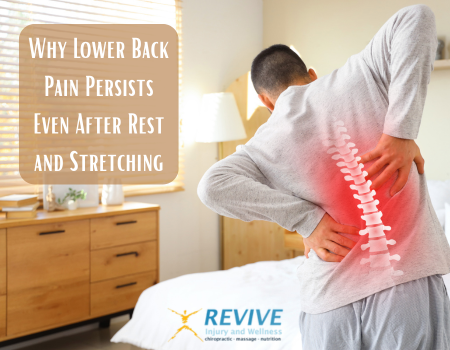
Lower back pain is one of the most common complaints among adults, and it can be incredibly frustrating when rest and stretching don’t provide relief. Many people assume that gentle stretching or taking a few days off from activity will solve the problem, only to find the discomfort returning, sometimes even more persistent than before. Understanding why lower back pain lingers requires looking beyond muscle tightness to the structural factors that contribute to ongoing discomfort, and exploring how chiropractic care can help address them.
Muscular Causes: When Rest Alone Isn’t Enough
Muscle strain is often the first culprit people consider when dealing with lower back pain. Overuse, poor posture, heavy lifting, or prolonged sitting can cause tightness and soreness in the muscles supporting the spine. Stretching and rest usually help relieve this type of pain, especially if it’s acute.
However, muscular issues are only part of the story. While stretching can release tension, it doesn’t always address deeper problems, such as weakened core muscles or imbalanced movement patterns. If certain muscles are overworked while others are underactive, the spine may not be properly supported, which can allow pain to persist even after the initial strain has healed. In these cases, targeted strengthening exercises and postural correction are often necessary alongside stretching.
Structural Causes: Why Pain Keeps Coming Back
Lower back pain that persists despite rest often has a structural origin. The spine is a complex system of vertebrae, discs, ligaments, and nerves. Misalignments, disc degeneration, or joint dysfunction can create ongoing discomfort that stretching alone cannot fix.
Common structural contributors include:
Spinal misalignment: When vertebrae shift out of their natural position, it can place pressure on surrounding muscles, ligaments, and nerves. This misalignment can limit mobility and create chronic tension.
Degenerative disc changes: Over time, spinal discs can lose height and elasticity, reducing their ability to absorb shock. This can lead to irritation of nearby nerves and persistent pain.
Facet joint dysfunction: These small joints between vertebrae can become inflamed or restricted, often causing localized or radiating pain.
Structural issues often require professional assessment. Without correction, muscular efforts to compensate for misalignment can actually worsen pain or create new tension in surrounding areas.
The Role of Chiropractic Correction
Chiropractic care aims to realign the spine and improve the natural movement of its joints and surrounding structures. Chiropractors use hands-on adjustments and other techniques to correct misalignments, improve joint mobility, and relieve nerve pressure.
Chiropractic treatment addresses the root cause of persistent pain rather than just the symptoms. For example: adjustments can reduce abnormal spinal stress, relieving pressure on muscles and nerves, targeted mobilization can improve joint function, allowing muscles to relax and function more efficiently, and treatment plans often include posture guidance, core strengthening, and ergonomic recommendations to prevent recurrence.
Patients who combine chiropractic care with stretching, strengthening, and healthy movement patterns often experience faster and longer-lasting relief than those relying on rest and stretching alone.
When to Seek Professional Help
While minor muscle strains can improve with self-care, persistent lower back pain warrants professional evaluation, especially if: Pain lasts longer than a few weeks despite rest and stretching, discomfort radiates down the legs, suggesting nerve involvement, pain interferes with daily activities or sleep, and there is a history of spinal injury or chronic conditions
Addressing problems early can stop minor issues from turning into long-term pain. A chiropractor or other qualified professional can determine whether structural correction, strengthening, or a combination of therapies is necessary.
Lower back pain that persists despite rest and stretching is often a sign that the underlying issue goes beyond muscle tightness. Structural factors such as spinal misalignment, disc degeneration, or joint dysfunction can create ongoing discomfort that self-care alone cannot resolve. Chiropractic care offers a pathway to address these root causes, restoring alignment, improving function, and reducing pain.
For anyone struggling with chronic lower back pain, understanding the distinction between muscular and structural causes is key. Combining professional correction with targeted exercises, posture awareness, and healthy movement habits provides the best chance of lasting relief, so rest and stretching become a helpful supplement rather than the sole solution.